Why “Head Down” Isn’t the Whole Story
🌀 Why “Head Down” Isn’t the Whole Story
Many babies are head down by the third trimester, but head down simply means cephalic presentation — not optimal alignment. A baby can be head down and still:
- Be facing the parent’s abdomen (occiput posterior)
- Have their head tilted (asynclitic)
- Be slightly sideways (occiput transverse)
- Sit high in the pelvis without engagement
Each of these variations can influence how labor begins, how contractions feel, and how smoothly baby rotates and descends.
A head‑down baby who isn’t well‑aligned may still result in:
- Longer early labor
- Irregular contraction patterns
- Back labor
- Slower dilation
- More maternal exhaustion
- Increased likelihood of interventions
So yes — head down is good. But head down and well‑aligned is even better.
🌿 What “Optimal Fetal Positioning” Really Means
Optimal fetal positioning is about balance, space, and movement — the three pillars I teach all parents in my Spinning Babies Birth Prep Class.
Balance
Tension in the ligaments, fascia, or muscles can subtly shift the shape of the uterus and pelvis. When the body is balanced, baby has more room to settle into a position that makes rotation easier.
Space
A balanced body creates space in the lower uterus and pelvis. Space allows baby to tuck their chin, rotate their head, and descend smoothly.
Movement
Daily movement, maternal comfort techniques, and labor positions help baby navigate the pelvis. Movement isn’t about forcing baby into a position — it’s about inviting the body to work the way it was designed.
🔍 The Difference Between “Head Down” and “Well Positioned”
A helpful way to explain this is with this simple comparison:
- Head Down Only: Baby is pointed in the right direction, but may not be aligned for efficient labor.
- Head Down + Well Positioned: Baby’s head is flexed, aligned with the pelvis, and ready to rotate through labor with less resistance.
A baby who is head down but posterior or asynclitic may still be born vaginally, a very common variation of normal— but the journey can be longer, more intense, and more exhausting for Mama.
🤰 How Parents Can Support Better Alignment Before Labor
This is where my classes and doula support make such a difference. Parents can learn:
- Daily activities that encourage balance and comfort
- The Three Balances℠ to release tension and create space
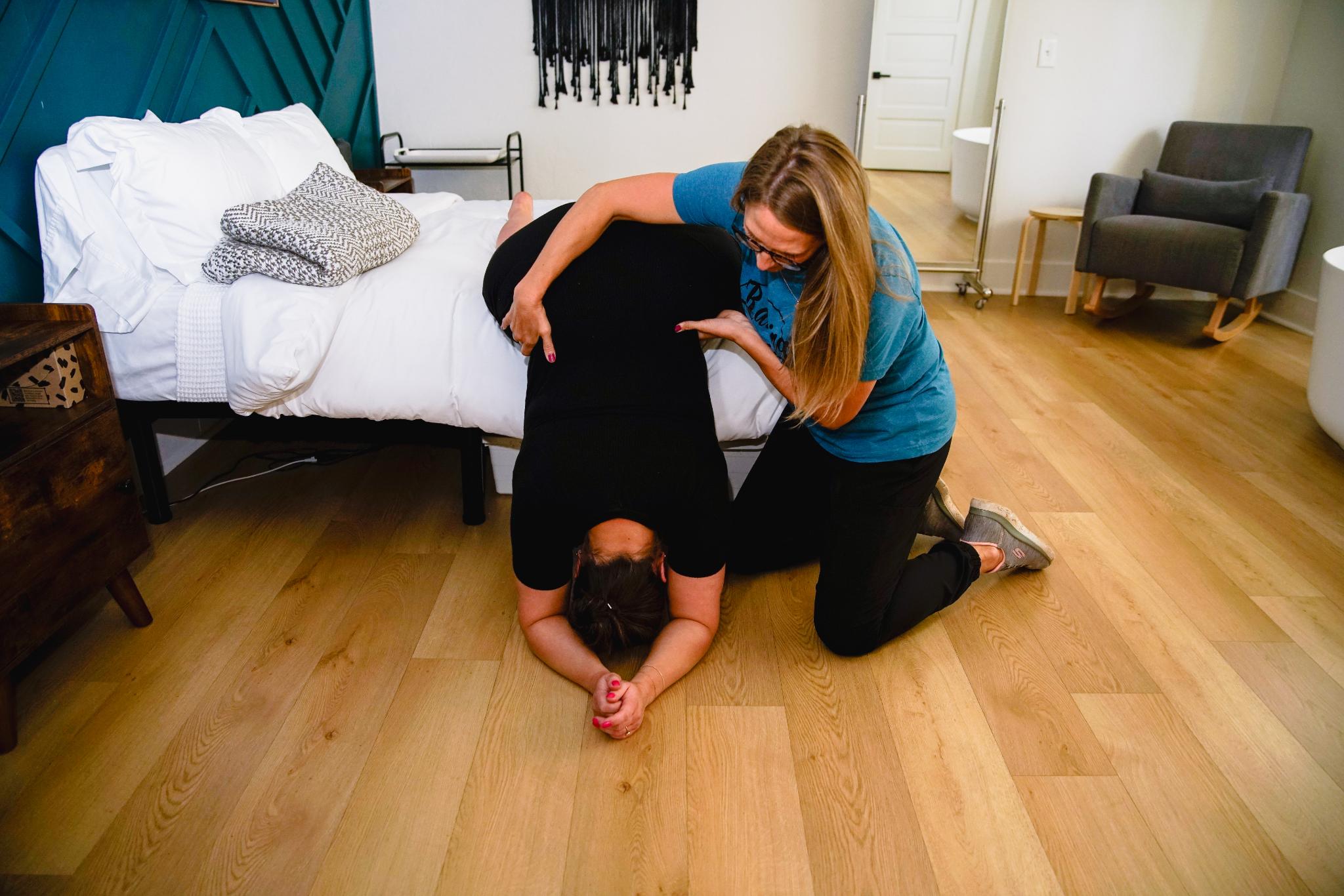
- Forward‑leaning Inversion to help the lower uterus relax
- Side‑lying Release to support pelvic mobility
- Rest Smart℠ positions for nighttime alignment
- Movement and positions during labor that help baby rotate
These aren’t “fixes” — they’re gentle invitations for the body to find balance and for baby to find their best position.
💜 Why This Matters for Birth
When baby is well‑aligned:
- Contractions often feel more productive
- Labor tends to progress more smoothly
- There’s less back labor
- Parents feel more in control and less overwhelmed
- The need for interventions may decrease
- Birth can feel more connected, calm, and empowering
This is the heart and soul of my work: helping families understand their bodies, trust the process, and use simple tools that make a meaningful difference.
📣 A Message for Expectant Parents
Head down is a great start — but it’s not the whole picture. Your baby’s position is dynamic, and your body has an incredible ability to create the space and balance needed for birth. With gentle daily practices, mindful movement, and the right support, you can help your baby find the position that makes labor smoother and more comfortable.